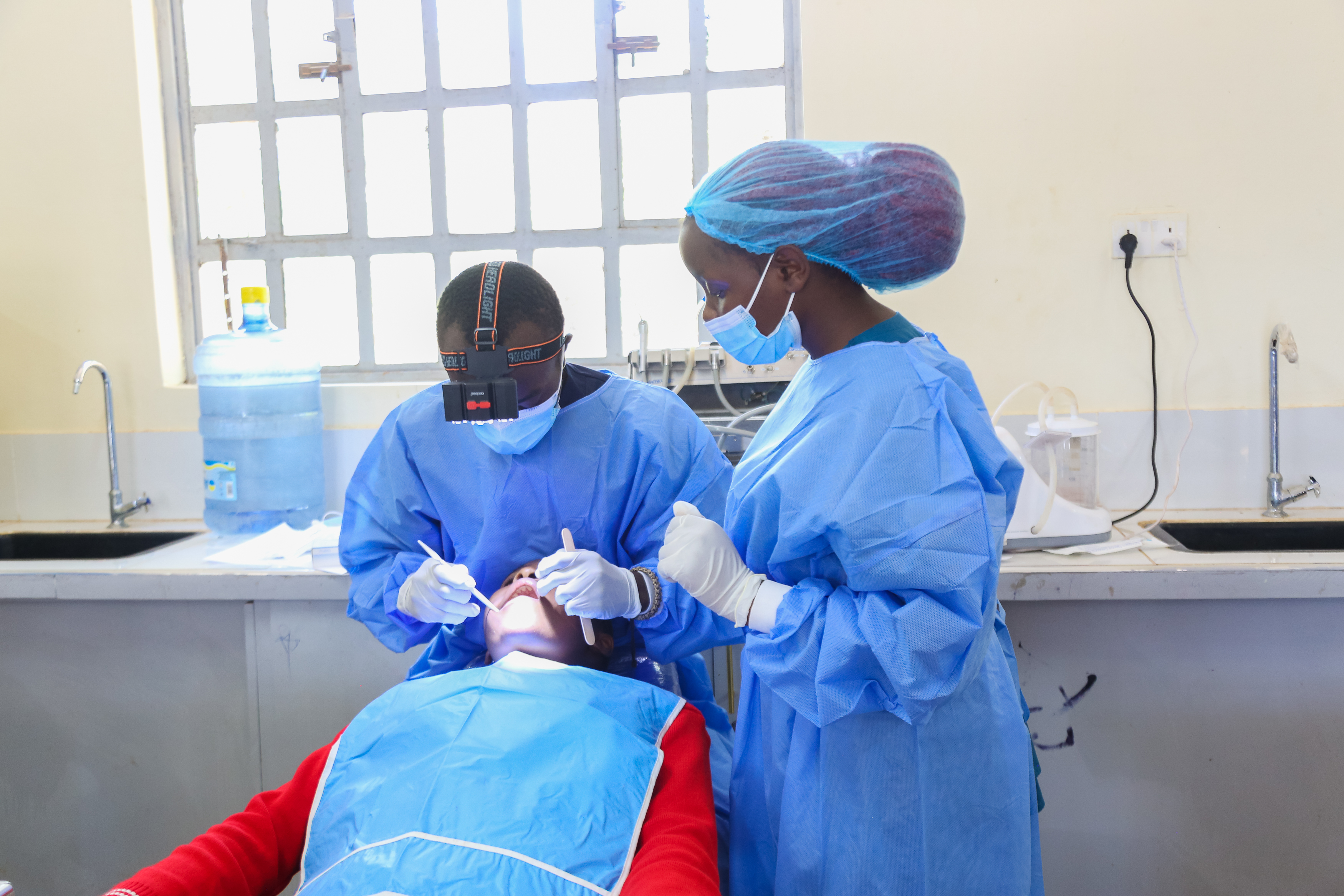
For some students, a visit to the dentist is routine. For others, the dental chair is something they have only heard about, seen in pictures, or imagined as something they will experience someday. At a recent school dental outreach by Tabasamu Mtoto Organization, we met students who were sitting in a dental chair for the first time.
There was curiosity. There were questions. And, for some, a little nervousness.
But as the dental team began examining their teeth, something else happened. The students began to learn. A dental examination became an opportunity to understand their own oral health. A professional cleaning became an introduction to a level of care many had never experienced. Questions that may have gone unasked suddenly had someone to answer them.
For us, these moments highlighted something easy to overlook: access to dental care is not the same for every child. A young person can go through years of school without ever having a professional dental check-up. They can live with a dental condition without understanding what it is. They can experience discomfort, changes in their appearance, or even feel self-conscious about their smile without knowing that help is available. And sometimes, there may be no pain at all.
During our school outreach, we encountered students living with different oral health concerns, including dental fluorosis and infections. Some were being introduced to professional dental care for the first time.
That first encounter matters.
It can change how a young person understands their health. It can encourage them to pay more attention to their teeth. It can help them recognise when something needs attention. And for a student who has felt embarrassed or uncomfortable about their smile, being listened to and cared for can mean much more than a dental procedure.
This is particularly important during adolescence. The teenage years are a time when young people are becoming more conscious of how they look and how they are perceived by others. A visible dental condition can sometimes become a source of teasing, self-consciousness or withdrawal.
Oral health, therefore, is not only about preventing cavities or treating infections. It can also be connected to confidence, dignity and wellbeing. That is why taking oral health services into schools matters.
Schools provide an opportunity to reach young people where they already are. They allow education, screening and care to happen in the same space, while also creating opportunities for teachers and families to become part of the conversation.
But one dental camp cannot close the gap in access.
What it can do is create a first experience. It can introduce a young person to professional dental care and help them understand that their oral health deserves attention just like any other part of their wellbeing.
For some students, the most important thing they take home may be a newly cleaned smile. For another, it may be the knowledge that something they had been worried about has an explanation and a possible solution. And for someone else, it may simply be the confidence to sit in a dental chair again.
At Tabasamu Mtoto Organization, we believe that every young person deserves that opportunity.
Because sometimes, the first time in a dental chair is more than a first dental visit. It is the beginning of understanding that their smile matters.